
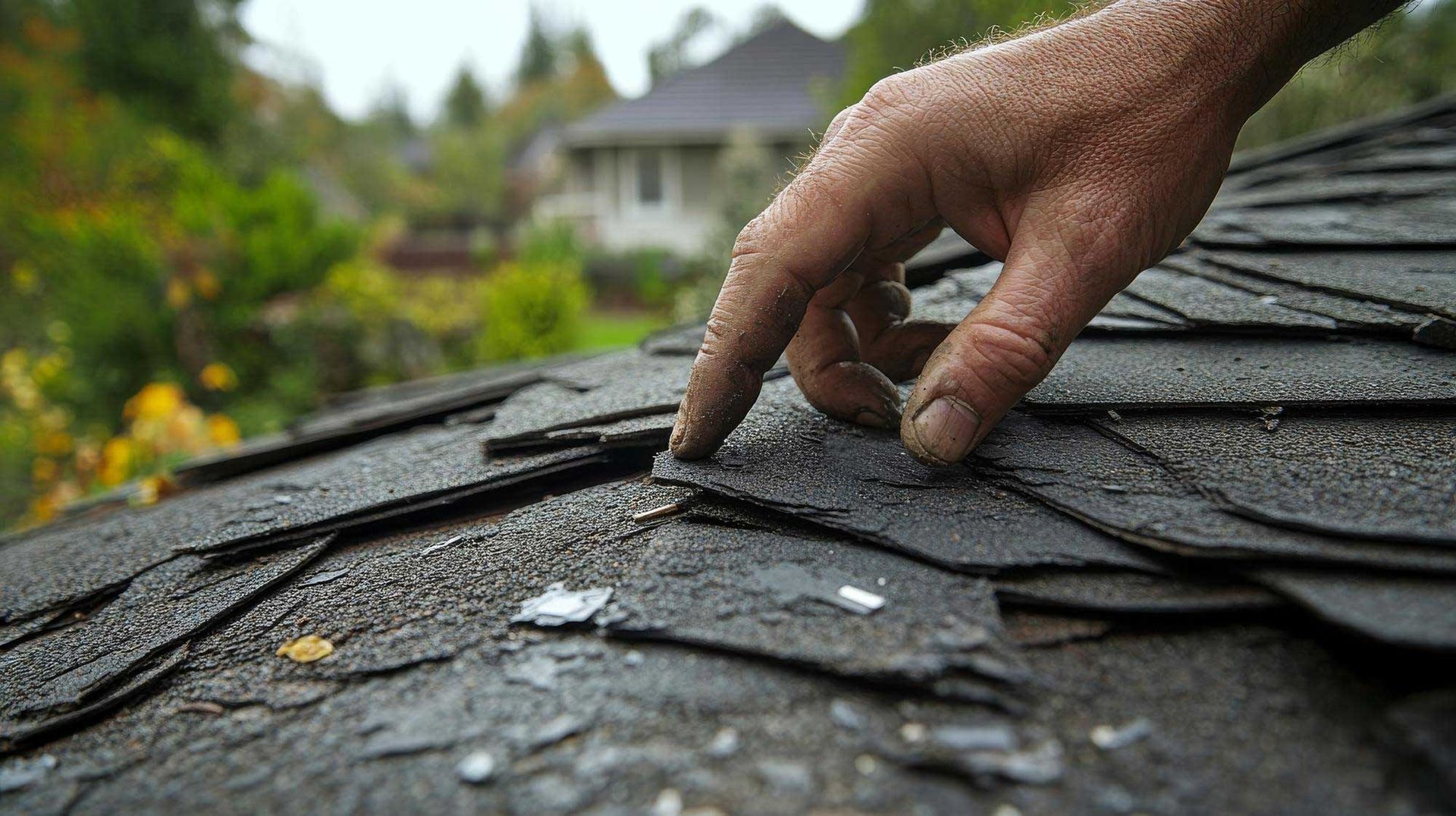
Filing a hail damage roof claim in St. Louis comes down to eight steps: stop any active leaks, document the storm from the ground, get a professional inspection, read your policy, file the claim, meet the adjuster, review the settlement, and close out the job so you collect every dollar you are owed. Most homeowners only go through this once or twice, and the mistakes that cost the most money happen in the first week. Here is the process in order.
Key Takeaways
- Get a roof inspection before you file. A claim filed on a roof with no real damage still goes on your record.
- Check whether your policy has a percentage-based wind and hail deductible. On many St. Louis policies it is 1% or 2% of your dwelling coverage, not a flat $1,000.
- Most replacement cost policies pay in two checks. You only get the second one after the work is finished.
- Missouri law prohibits contractors from offering to cover or "eat" your deductible. Anyone who offers is breaking the law.
- Most policies set a deadline for filing, often within one year of the storm. Check yours.
Step 1: Stop Active Leaks
If water is coming in, deal with that first. Most policies require you to take reasonable steps to prevent further damage, and an unchecked leak can turn a covered roof claim into a fight over interior damage. A tarp over the affected area is usually enough. If you need help, emergency roof repair is a separate, fast service. Keep the receipt, since tarping is typically reimbursable as part of the claim.
Step 2: Document the Storm From the Ground
Do not climb onto the roof. Everything you need right now can be photographed safely from the yard:
- Hailstones on the ground, with a coin or ruler for scale
- Dents in gutters, downspouts, and metal roof vents
- Dings on air conditioner fins, mailboxes, and vehicles
- Cracked or chipped siding and window screens
- The date and approximate time of the storm
Dented soft metals are some of the best evidence you can have, because they show an adjuster that hail of meaningful size hit your property.
Step 3: Get a Free Roof Inspection Before You File
This is the step most homeowners skip, and it matters. Hail damage on asphalt shingles is often invisible from the ground: bruised mats, loosened granules, and small fractures that will not leak for a year or two. An experienced local roofer can confirm whether there is real, claimable hail damage and document it with photos before you ever call your carrier.
Why bother? Because if you file a claim and the adjuster finds no damage, the claim is still recorded in your insurance history. An inspection first means you only file when there is something worth filing.
Step 4: Read Your Policy
Pull out your declarations page and look for three things:
- Your wind and hail deductible. Many St. Louis area policies now use a percentage of your dwelling coverage. A 2% deductible on a home insured for $300,000 is $6,000, which changes the math on a smaller claim.
- Replacement cost (RCV) or actual cash value (ACV). RCV pays to replace the roof at today's prices. ACV subtracts depreciation for the roof's age, so an older roof on an ACV policy may pay out far less.
- Your filing deadline. Many policies require claims within one year of the storm. Some are shorter.
Step 5: File the Claim
Call your insurer or use their app, give the date of the storm, and describe the damage. You will receive a claim number. Write it down; you will need it for every conversation that follows.
Step 6: Meet the Adjuster
The insurance company will send an adjuster to inspect the roof. Have your roofer there for that appointment. A contractor who works insurance claims regularly can walk the roof with the adjuster, point out damage that is easy to miss, and make sure items like drip edge, ventilation, and ice and water shield are noted where local building code requires them. The claim itself stays between you and your insurer, but having someone on the roof who knows what hail damage looks like makes a real difference.
Step 7: Understand the Settlement
On a replacement cost policy, the payout usually arrives in two parts. Say the full replacement is valued at $16,000, depreciation is $4,000, and your deductible is $2,000. The first check would be $10,000 (the full value, minus depreciation, minus your deductible). The remaining $4,000 in depreciation is released after the work is complete. If the adjuster missed something, your roofer can submit a supplement with documentation before work begins.
If the damage covers a large share of the roof, the insurer may approve a full replacement rather than repairs. Our guide to roof repair vs. replacement explains where that line usually falls.
Step 8: Complete the Work and Close the Claim
Once the roof is finished, your contractor sends the final invoice and completion photos to the insurer, which releases the depreciation holdback. Do not skip this step. Homeowners who forget to close out the claim leave thousands of dollars on the table.
Red Flags: How to Spot a Storm Chaser
After every major hailstorm, out-of-town crews knock on doors across St. Charles and St. Louis counties. Watch for these warning signs:
- An offer to cover your deductible. In Missouri, a contractor promising to pay or rebate your deductible is breaking the law. It is also insurance fraud.
- Pressure to sign on the doorstep. A legitimate roofer will give you time to read the contract.
- No local address or out-of-state plates. If they will not be here next year, neither is your warranty.
- A request for full payment up front. Deposits are normal. Full payment before work starts is not.
Missouri law also gives you the right to cancel a roofing contract tied to an insurance claim within five business days of receiving written notice from your insurer that the claim was denied, in whole or in part. A reputable contractor will spell that out in writing.
Frequently Asked Questions
Will a hail claim raise my insurance rates? It can. Weather claims are generally treated differently from claims you caused, but every insurer handles this differently. Ask your agent before filing if you are concerned.
What if my claim is denied? Ask the insurer for the denial in writing, including the specific reason. You can request a re-inspection, and your roofer can provide additional documentation.
How long do I have to file after a hailstorm? It depends on your policy. Many require filing within one year of the storm date, but check yours, since some are shorter.
Does insurance cover hail damage to siding and gutters? Typically yes, if the damage came from the same storm. Include it in the same claim.
Get an Inspection Before You Call Your Insurer
The order matters. A free inspection first tells you whether you have a claim worth filing, gives you documentation an adjuster will take seriously, and keeps a claim with no damage off your record. At JS Exteriors, we have helped St. Louis area homeowners through the insurance process since 2008, from the first inspection to the final check. Schedule your free inspection and find out where you stand.